Reading romance fiction is single-handedly the reason I got an A* in Spanish at school and now live in Spain with a Spanish-speaking partner.
Okay, there are two lies in that statement.
First of all, I was dating the Spanish teacher’s son. Second of all, I started off with the Spanish comic book characters Mortadelo y Filemón, not exactly swoon-worthy romance.
I only moved on to Spanish romance fiction later. But still—while most people in my Spanish class were showing up stoned, throwing pens at the Danish kid while the teacher wasn’t looking, and generally trying to avoid getting U’s and F’s, there I was: at break time, on the train home, at night, reading romance fiction. In Spanish.
I wasn’t forced into it.
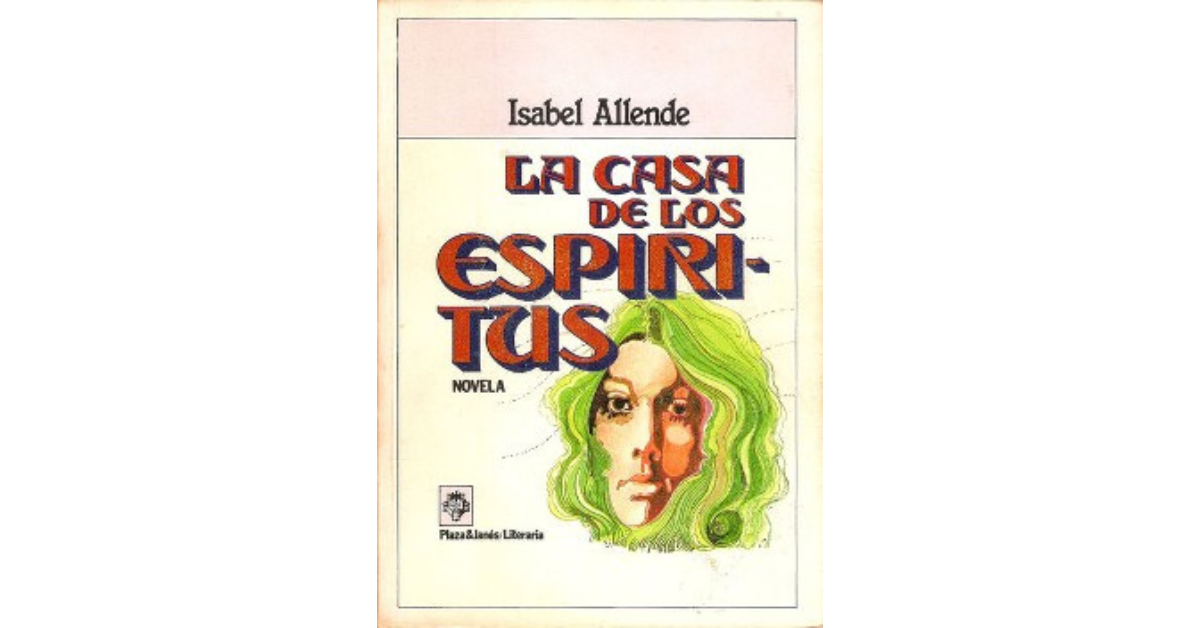
The first romance and magical realism book I fell in love with—La Casa de los Espíritus by Isabel Allende—was over 450 pages long. And there I’d sit, book in one hand, dictionary in the other, going page by painstaking page.
I’m now 32. I read that book when I was, what, 16? That’s half my life ago. And I can still vividly remember reading—in Spanish—the torture that Alba, the granddaughter in the story, went through. The cell so small you couldn’t lie down or stand up in it.
I can still picture the complicated, painful relationship between Clara and Esteban, him riding around the hacienda on horseback like I saw it last month.
That book left a mark on me—from the horrors of political persecution to the soaring heights of love, magic, and sacrifice.
What’s my point?
Years later, at university, I shared a house with Tabitha, who was studying Japanese. I remember her saying that the best way to learn a language was to take something you already do and start doing it in that language. In other words, make the language part of your daily life.
She suggested reading the news in Japanese. Sensible advice. But for me, it was obvious: reading. Reading was always one of my greatest loves, which explains why I had the patience to get through 450 pages of a wild love story in another language, dictionary in hand.
And here’s the thing—I think reading romance fiction in Spanish (or whatever language you’re learning) has advantages that go beyond just vocabulary. You’re not just memorizing words and phrases. You’re building a mental inventory of personalities, relationships, and cultural nuances.
My mum used to say she watched Coronation Street for 30 years because the characters were like her friends. And that’s what happens with great fiction—you build a memory bank of characters who live in a language and culture that’s new to you.
Studying Spanish from textbooks? Inherently boring. Who reads textbooks for fun? Who voluntarily conjugates verbs in their spare time?
No one.
But if you love to read—and especially if you love romance, where the characters are the plot—would you find it boring to get absorbed in a compelling love story? Of course not! Even with the inconvenience of a dictionary, you’ll want to turn the next page. You’ll want to know if Blanca gets to marry her true love. If Clara finally leaves Esteban after years of abuse.
That kind of emotional investment gives you a jolt of motivation you can’t get from paying thousands for classes.
t’s not just the language. It’s the culture. The mess of it. The way words start making sense only when you get why people say them like that.
Some schools actually get this. A friend did a Spanish course at Speakeasy BCN in Barcelona. Said they didn’t just hammer verbs and vocab—they’d dive into history, books, weird little art movements. Because, yeah, you can memorize words all day. But if you don’t get the world those words walk around in? What’s the point?
The same goes for film. Imagine you’re an Almodóvar fan. Would sitting through Volver or Todo Sobre Mi Madre in Spanish—pausing every five minutes to check the dictionary—feel like a chore if you love his cinematography?
Of course not.
I can’t believe more people aren’t pushing this method of language learning.
So, if you’ve made it this far, I’m assuming two things: you’re interested in learning Spanish, and you’re interested in romance fiction.
Trust me—there’s no better way to learn. It’s linguistic and cultural immersion wrapped up in a story you actually want to spend time with. It turns language practice from a chore into something you look forward to at the end of the day.
But be warned!
I ended up marrying a Spanish person. Reading romance fiction in Spanish might teach you the language… but it might also change your life.