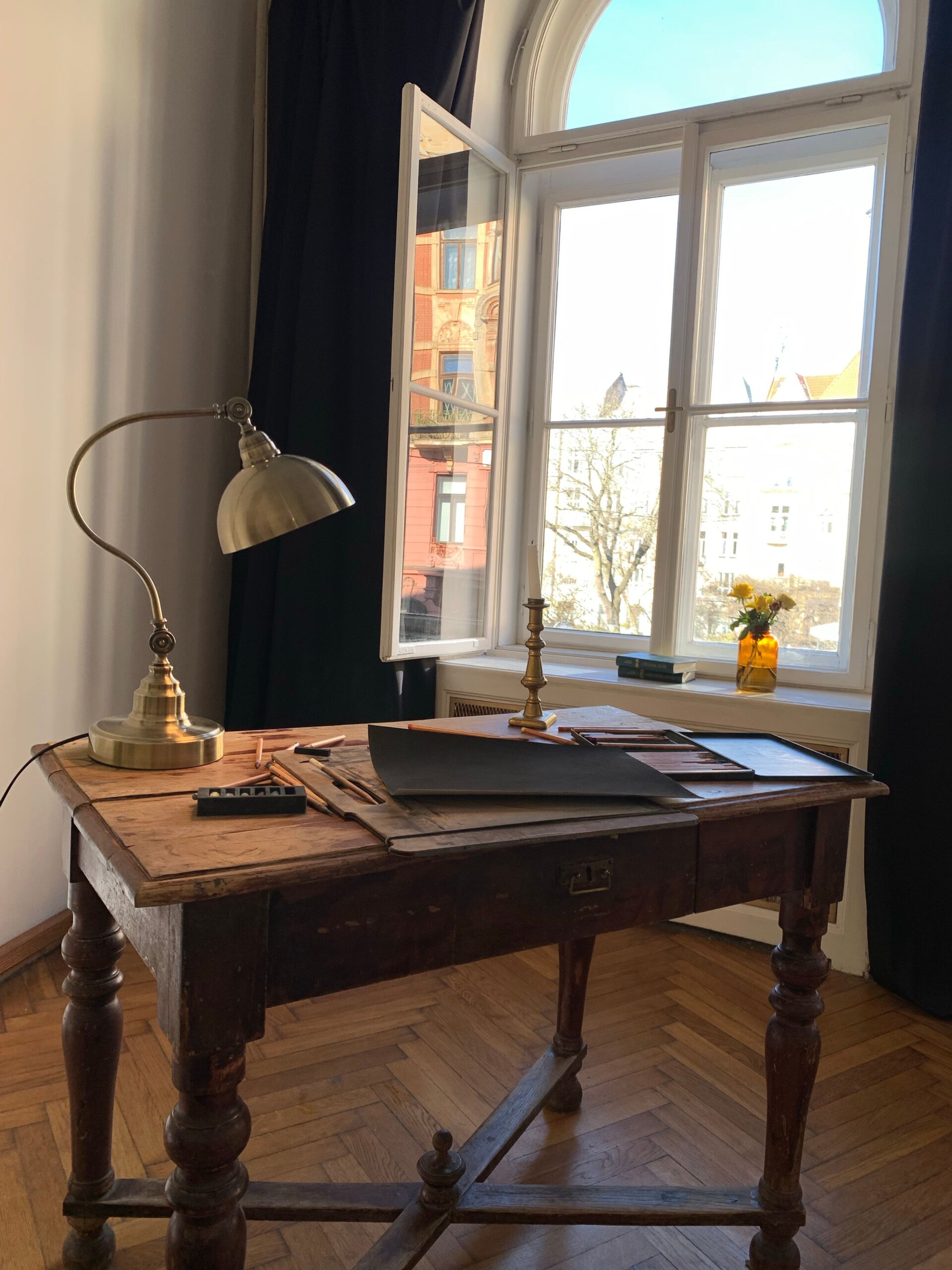
I spend a lot of time thinking about rooms.
Not beautifully arranged rooms with colour-coordinated cushions and suspiciously empty kitchen counters. I mean the rooms people actually live in. The chair covered in clothes. The mug left on a windowsill. The expensive sofa nobody finds comfortable. The cupboard that cannot be opened without something falling out.
Homes are useful to a writer because people reveal themselves through them, even when they are trying very hard not to.
A character can insist she has moved on from a relationship while still keeping the spare key in the same little bowl by the door. Someone can claim not to care what other people think while living in a home arranged almost entirely for visitors. A spotless kitchen might belong to an exceptionally organised person. It might also belong to someone who never cooks, cannot relax or grew up in a house where making a mess meant trouble.
The room itself does not tell us which answer is correct. It gives us something better: a question.
Money Leaves Marks
Writers often describe a character as rich, poor or comfortably off and leave it there. Homes make those distinctions more interesting.
Money appears in what gets repaired and what has been left for another year. It is in the good mattress sitting on a cheap frame, the beautiful dining table bought second-hand and the bathroom door that only closes if you lift it slightly.
Two people earning the same amount may live very differently. One spends money on the parts of the home nobody sees. The boiler works, the windows keep out the cold and every bill is paid early. The other has a dramatic velvet sofa and an empty fridge.
That choice tells us more than a paragraph explaining their attitude to money.
Inherited wealth leaves different marks again. A character may own a valuable house and still have very little cash. The place could be full of things chosen by dead relatives, none of which suit the person now living among them. There is plenty of room but very little freedom.
That is a useful complication in romance. A beautiful house can be a privilege, a burden or both.
The Difference Between Taste and Aspiration
What people like and what they want to be seen liking are not always the same thing.
A character might fill her shelves with serious novels while keeping the books she actually reads beside the bed. Someone who longs for a quieter life may decorate his flat like a boutique hotel because that is what he thinks success is supposed to look like. Another person might refuse to replace a battered armchair because it came from the first home where she ever felt safe.
This is where interiors stop being decoration.
The objects a character chooses can show aspiration, embarrassment and loyalty. The objects they keep unwillingly can carry family pressure. The things they hide before somebody visits are often the most revealing of all.
Romantic scenes become more charged when one character enters the other’s home for the first time. They are seeing evidence. Not necessarily dramatic evidence, but enough to disturb whatever assumptions they have made.
The confident man with the severe black wardrobe owns a duvet covered in tiny lemons. The apparently careless woman has alphabetised her spice rack. Someone who seems open and affectionate has no photographs anywhere.
You do not need to explain every contradiction. Let the visiting character notice it.
Location Changes the Relationship
The same couple will behave differently depending on where they live.
Put them in a small apartment and privacy becomes difficult. They can hear each other moving around. An argument cannot be escaped by disappearing into another wing of the house. If one person sleeps on the sofa, the other has to walk past them to reach the kitchen.
Give them a large villa and the problem changes. Now they can avoid each other for hours. Space allows silence to stretch. One person can be outside by the pool while the other stays upstairs pretending to work.
This is one reason browsing real homes can be useful when building a fictional setting. Looking through homes currently on the market in Jávea, for example, shows how much the rhythm of a story could change between an apartment near the Port, a house in the Old Town and a villa in one of the quieter residential areas.
The location is doing more than providing a view. It decides whether a character walks for coffee or drives. It affects who they meet by accident, how often neighbours see them and whether returning home feels comforting or lonely.
A setting becomes convincing when it creates these small consequences.
What Has Been Changed
A home also contains different versions of its owner.
There may be the furniture bought during a previous relationship, the wallpaper chosen to please a parent or the unfinished room that was meant to become a nursery. A box in the spare room can carry more emotional weight than an entire wall of framed photographs.
Renovations are especially revealing because they show intention. What did the character decide was worth changing? What did they leave alone?
Someone might spend thousands opening up the kitchen while refusing to touch a cramped bedroom. Another character paints every room immediately after a breakup because the old colours feel contaminated. Someone else moves into a partner’s home and changes almost nothing, worried that claiming too much space will make them unwelcome.
These decisions can sit quietly beneath the main plot. They do not need to become symbols with neat explanations attached. Most people do not fully understand why they keep certain things either.
The First Visit
Bringing a romantic interest home is a small act of exposure.
Even a character who appears completely relaxed will usually make choices before the door opens. Hide the washing. Leave the book on the coffee table because it makes them look interesting. Put away the medication. Check the bathroom. Move the photograph.
Then the visitor notices something unexpected.
This is where a house can alter the balance between two characters. A person who has seemed intimidating may suddenly look vulnerable. Someone charming may become oddly controlling when a glass is placed on the wrong table. A casual relationship can feel more serious the moment one person is trusted with a key.
The important detail is rarely the most expensive or visually impressive part of the home. It is the object that does not fit the version of the character we have seen so far.
A second toothbrush still in its packaging.
A child’s drawing fixed to the fridge.
Two wine glasses on the draining board when the character supposedly lives alone.
The house has spoken before its owner has worked out what to say.