A few years ago, I sent a chapter of my romance novel to a close friend. Someone I trusted. Someone who loved books and always gave me honest, thoughtful feedback.
Her response?
“I had to force myself to get through it.”
Oof. Gut punch.
She wasn’t trying to be harsh. She was trying to help. But still—ouch.
She explained that the story was fine, but she couldn’t see it. She couldn’t feel it. The characters, the emotions, the world I was trying to create—it all felt flat. And if she, one of my biggest supporters, couldn’t immerse herself in the story, how was a stranger supposed to?
So, I did what any self-doubting writer does: wallowed in self-pity for a solid two weeks.
And then… I fell into a deep-dive on descriptive writing.
Enter Charles Dickens
A lot of roads led to one name: Charles Dickens.
Take this passage from A Christmas Carol:
“Oh! but he was a tight-fisted hand at the grindstone, Scrooge! a squeezing, wrenching, grasping, scraping, clutching, covetous old sinner! Hard and sharp as a flint, from which no steel had ever struck out generous fire; secret and self-contained, and solitary as an oyster.”
I mean… damn.
Dickens didn’t just say Scrooge was stingy—he made you feel it. You can practically see the man hoarding his coins in some damp, candle-lit room, hunched over like a goblin.
I needed that. I needed to bring that richness into my writing.
But how?
That’s when I had a thought: if I wanted to describe the world better, I had to experience it better. So, I started paying attention—to everything. Here’s what I did, and how it changed my writing forever.
1. Taste – A Wine Tour in the Priorat
If there’s one place in Spain that knows flavour, it’s the Priorat. This tiny Catalan wine region is famous for its deep, complex reds, the kind that taste like history and sunbaked earth.
I booked a tour and visited three wineries. At the first stop, I tasted a glass of old-vine Garnacha. I swirled it, took a sip. Red fruit? Tannins? I had no idea.
But then, the winemaker started breaking it down.
“Notice the sun-dried cherry? The hint of licorice? That whisper of black pepper at the end?”
And suddenly—I got it. The wine wasn’t just wine anymore. It was layers of warmth, spice, time pressed into a glass.
That moment flipped a switch in my writing. I stopped describing things in broad strokes and started looking for specifics.
Instead of “He kissed her passionately,” I wrote “His lips tasted of dark chocolate and Rioja, the warmth lingering long after he pulled away.”
Much better.
2. Smell – Wandering a Spice Market in Seville
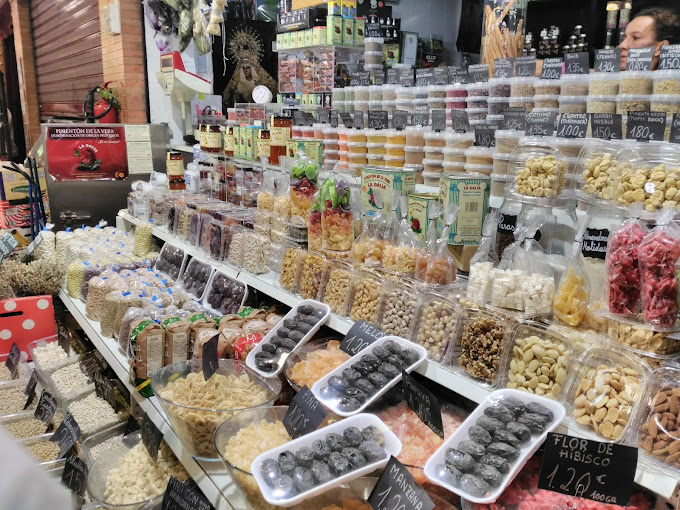
The Mercado de Triana is chaos in the best way. Stalls bursting with colour, voices overlapping, spices hitting your nose before you even see them.
I walked through with no real plan—just let scent guide me.
The smokey sweetness of paprika.
The sharp, fresh burst of dried orange peel.
The deep green of freshly chopped parsley.
Smell is a time machine. It takes you places before you even realize you’ve gone. It’s the difference between “The bakery smelled good” and “The air was thick with the scent of butter and cinnamon, warm like a childhood memory.”
Now, when I write a scene, I always ask: What does this place smell like? Because sometimes, that tells the story better than words ever could.
3. Sight – Sketching in a Madrid Plaza
I’m not an artist. At all. But one afternoon, I sat in Madrid’s Plaza Mayor with a sketchbook, trying to capture what I saw.
At first, I focused on the obvious: the grand buildings, the statues. But then—I started noticing details.
The way the golden light softened the edges of the rooftops.
The way the street performer’s shoes were worn at the tips.
The way pigeons scattered in frantic bursts whenever a child ran through.
I realized that great description isn’t just about what’s there—it’s about what stands out. The little things that make a moment feel real.
4. Touch – Throwing Clay at a Pottery Workshop
At a tiny studio in Granada, I sank my hands into wet clay. It was soft, slick, but also… resistant. Like it had a mind of its own.
I’d never really thought about texture before.
But touch is powerful in writing. It’s the difference between “She ran her hands along the wooden table” and “Her fingers traced the grooves in the old wood, feeling the rough ridges where time had worn it away.”
Details. Always details.
5. Hearing – A Hidden Flamenco Tablao
One night in Seville, I found myself in a dimly lit tablao, watching a flamenco performance that felt like being struck by lightning.
The stomp of heels against wood.
The haunting cry of the singer.
The sudden, hushed silence before the dancer’s final spin.
Flamenco is alive. It’s tension, release, rhythm.
And I realized—dialogue should feel like that too.
It’s not just what people say. It’s the pauses. The way voices rise and fall. The tension in what isn’t said.
Bringing It All Together
I thought improving my descriptive writing meant sitting at my desk and trying harder.
Turns out, it meant getting out into the world and paying attention.
Wine tours. Spice markets. Sketchbooks. Clay-covered hands. Flamenco nights.
Each one sharpened my senses and, in turn, my storytelling.
So if your writing ever feels flat, step away from the page.
Go out. Taste, smell, see, touch, listen.
Then come back—and put it all in your words.
And this time?
Your readers won’t have to force themselves to get through it.